Bookkeeping

QuickBooks Self-Employed Review: Features, Pros & Cons

quickbooks self employed

It’s also a good idea to ensure your books are reconciled — learn more about how to reconcile your books here. Take a look at our blog post understanding income tax for advice about expenses and completing Self Assessment. Our team can give you technical advice about downloading the figures you need from your QuickBooks account, but for other advice, please consult an accountant. QuickBooks Self-Employed is intended for freelancers, contractors, and consultants. If you are registered for Quebec Sales Tax (QST) and need to track QST, and/or require payroll, QuickBooks Online EasyStart may be right for you. Sign in to QuickBooks Online, then go to “Taxes” in the left navigation panel.

  • Businesses whose home currency is not GBP are currently not supported.
  • However, in order to use the app, you must have a paid subscription to QuickBooks Solopreneur software.
  • However, those with more complex needs might find better options in QuickBooks Online or FreshBooks.
  • Seamlessly connect to Shopify, CBA, Westpac, PayPal and over 300 other business apps to delight customers and help your business thrive.
  • If sending basic invoices is all you need, we can recommend plenty of cheaper options.

Accounting Trends: Predicting Business Future in 2024 and Beyond

QuickBooks Self-Employed is designed for freelancers and independent contractors, while QuickBooks Online is a comprehensive accounting solution for small businesses. QuickBooks Online is famous for integrating with hundreds of third-party apps, from HR and time-tracking apps to payroll. Unfortunately, QuickBooks Self-Employed doesn’t have the same perk.

quickbooks self employed

Sage 50 Accounting

quickbooks self employed

We believe everyone should be able to make financial decisions with confidence. QuickBooks provides app integration with over 650 popular business apps including PayPal, Square and Gusto to streamline your business’s accounting. QuickBooks Self-Employed is quickbooks self employed login tailored for freelancers and is simpler than other options like QuickBooks Online, which is better for larger businesses. Yes, QuickBooks Self-Employed has a feature that automatically tracks your mileage, making it easier to manage your business travel.

Tax Support

  • You can also join your QuickBooks Community, an online hub for QuickBooks answers and connecting with other QuickBooks users all over the world.
  • Many freelancers just base them off of what they paid the previous year, or you can plug your income so far into a tax calculator.
  • With QuickBooks Online, you’ll get everything you need to manage your business’s books.
  • Despite the double-entry bookkeeping feature, QuickBooks Solopreneur does not generate a balance sheet.
  • This growth is notably higher than the preceding quarter’s count of 180,000, and it marks a substantial leap from the count of 75,000 merely a year ago.
  • Simply sign up, log in and access your account from any internet connected computer, smartphone or tablet.
  • QuickBooks Self-Employed is good for freelancers who don’t have a lot of volume—perhaps if freelancing is just your side gig.

QuickBooks is one of the best accounting software for Accounts Payable Management small businesses—and for good reason. It’s packed with features including expense tracking, invoicing and mileage tracking. Quickbooks is the perfect choice of accounting software for sole traders, freelancers and contractors in Australia. Our software has been designed with small Aussie businesses in mind, so you can rest easy knowing we’re looking out for you. QuickBooks Solopreneur (formerly Self-Employed) is an accounting software product designed to help freelancers and sole proprietors keep tabs on income, expenses and tax obligations.

Visit our support hub

quickbooks self employed

Simple Start is best for businesses who need more tools to understand, run, and grow their business. This includes collaboration with your accountant, a broad array of business reports – including Balance Sheets, free guided setup, and the ability to connect 3rd party apps or sales channels. It offers easier setup, an improved transaction management experience, along with added flexibility and productivity tools.

quickbooks self employed

QuickBooks Self Employed Vs Simple Start

  • Banking services provided by our partner, Green Dot Bank, Member FDIC.
  • QuickBooks Self-Employed also gives you basic financial tracking tools, such as simple income tracking and end-of-year profit and loss assessments.
  • Our in-depth reviews of each product can give you a more thorough look at QuickBooks Self-Employed vs. Simple Start.
  • Its least expensive option (the Simple Start plan) starts at $35 per month for essentially the same features as the self-employed version.
  • For more information about Expert Assisted, refer to the QuickBooks Terms of Service.
  • QuickBooks Self-Employed is a handy tool designed for freelancers and independent workers.

You can now accept in-person payments through the app using a QR code, which is great for side hustlers and gross vs net small businesses. So Self Employed does still exist for those who are already on a subscription. For solopreneurs with simple business models, this is an excellent alternative to subscription-based software. For more powerful tools or alternative options, compare platforms at jamietrull.com/accounting. QuickBooks Solopreneur allows users to send estimates alongside invoices.


What is Working Capital? Formula & How to Calculate It

how to calculate changes in working capital

In the sample provided, you may notice the revenue growth is much lower and may look a bit artificial. In our example, the projection period is from FY2019 to FY2023, with 2023 being the terminal year. Due to the time value of money, $1,000 today is worth more than $1,000 next year. This article is going to focus on the most common application of a DCF, which is valuing a business. We will explain the concept behind and give you a step by step walkthrough on how to set up your spreadsheet and formulas to calculate the value of a business. A higher ratio means there’s more cash-on-hand, which is generally a good thing.

Current Liabilities

The ideal position is to have more current assets than current liabilities and thus have a positive net working capital balance. Calculating and understanding changes in Net Working Capital provides crucial insights into your company’s operational efficiency and cash flow dynamics. By regularly monitoring this metric and implementing strategies to optimize your working capital position, you can improve your business’s financial health and operational performance.

What is the Working Capital Formula?

This example shall give us a practical outlook of the concept and its ebbs and flows. Businesses are looking at how they can be more eco-friendly while managing their cash. It’s not just good for the planet but can also save money in the long run. It’s about making sure there’s enough cash to keep things rolling smoothly.

how to calculate changes in working capital

Table of Contents

It shows the difference between what a business owns (like cash, goods, and money others owe them) and what it owes to others. In this blog, we will dive into net working capital, learn how to calculate it correctly, and see why it’s crucial for a company’s financial well-being. And remember, if those changes are creating cash flow challenges or if you see opportunities for growth that require a bit more financial flexibility, that’s what we at Eboost Partners are here for.

Why Do We Add a Decrease in Net Working Capital to Cash Flow?

  • The most common examples of operating current assets include accounts receivable (A/R), inventory, and prepaid expenses.
  • Notably, FCF accounts for equipment and asset spending, as well as working capital changes.
  • Positive changes in working capital occur when current assets increase more than current liabilities, resulting in an increase in the net cash position.
  • We understand that managing working capital, especially during periods of growth or seasonal peaks, can be challenging.
  • Capital expenditure should also be projected when you prepare a forecast of the business (In our example it is provided ).
  • Net working capital can increase if company ownership or other stakeholders invest additional cash.

The Current assets include cash & cash equivalents, prepaid expenses, account receivables, inventory, and other short-term assets. So, businesses should define these two elements differently for financial decisions. It how to calculate changes in working capital shows individual reports for working capital from the balance sheet and cash flow result from the cash flow statement. Investors want to find out growth potential and financial stability from working capital. They use it in terms of daily affairs like operational planning or cash flow management. Extraordinary items like one-time expenses, asset sales or accounting policy changes can create huge variations in working capital calculation.

how to calculate changes in working capital

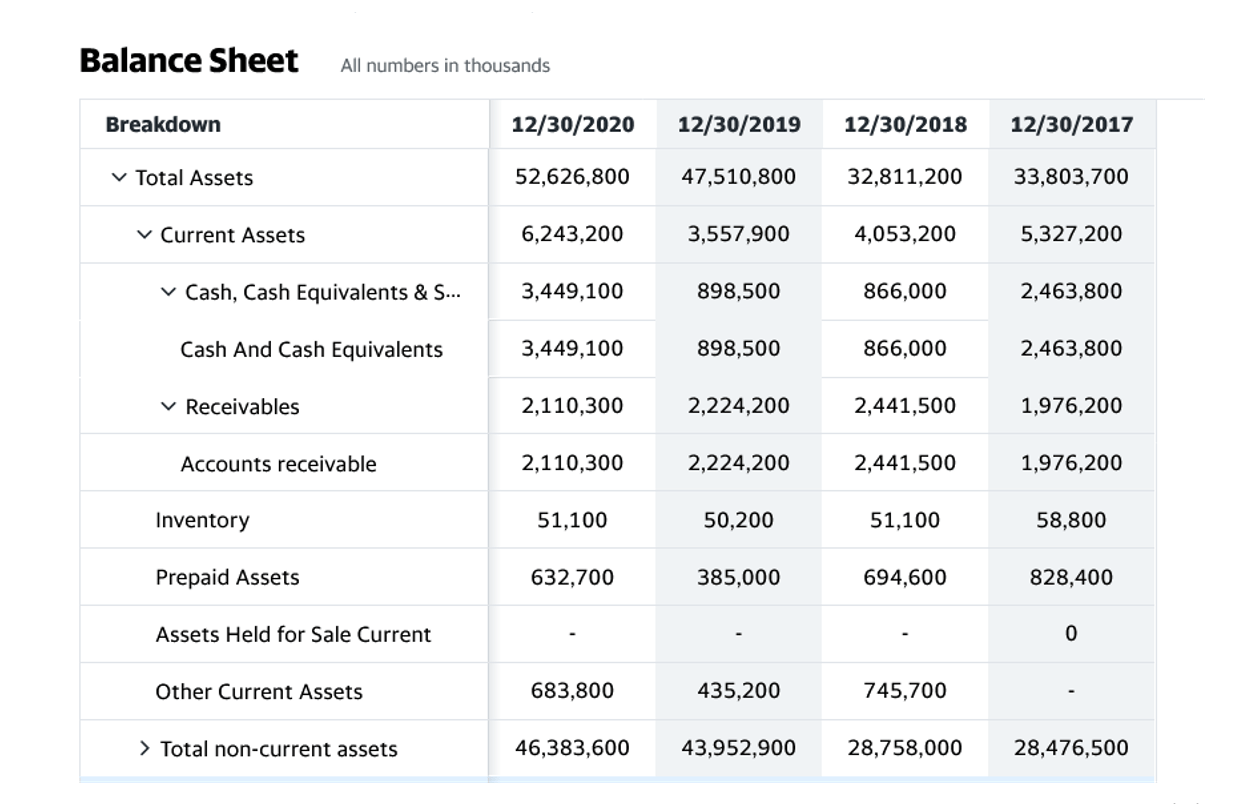
One essential component of working capital is the concept of change in working capital, which measures the difference between a company’s current assets and liabilities. Examples of changes in net working capital include scenarios where a company’s operating assets grow faster than its operating liabilities, leading to a positive change in net working capital. It’s quite easy to calculate working capital when you have already calculated total current assets and total current liabilities. So, in the table, you can see the calculated working capital for the years 2020 and 2019. Changes in net working capital can have significant implications for a company’s financial health.

Slavery Statement

how to calculate changes in working capital

Net Working Capital plays a significant role in assessing a company’s liquidity and operational efficiency. Yes, working capital can be zero if a company’s current assets match its current bookkeeping liabilities. While this doesn’t always indicate financial health, businesses should manage their working capital carefully to have adequate liquidity and meet short-term obligations.

how to calculate changes in working capital

Working capital is the difference between a company’s current assets and liabilities, while net working capital is the difference between current assets and current liabilities excluding short-term debt. You’ll need to tally up all your current assets to calculate net working capital. These items can be quickly converted into cash or used up within the next year. They typically include cash in the bank, raw materials and inventory ready for sale, short-term investments, and account receivables (the money customers owe you).

Cash Application Management

  • Understanding changes in working capital can help businesses identify trends and potential issues, improve cash flow management, and make more informed financial decisions.
  • Note, only the operating current assets and operating current liabilities are highlighted in the screenshot, which we’ll soon elaborate on.
  • Business expansion, such as launching a new product line, hiring staff, or opening new locations, often requires upfront costs that reduce working capital.
  • It’s the money you use for your everyday operations – paying suppliers, covering payroll, managing inventory, and handling other short-term expenses.
  • It can be used to value almost anything, from business value to real estate and financial instruments etc., as long as you know what the expected future cash flows are.
  • Due to the time value of money, $1,000 today is worth more than $1,000 next year.

In financial accounting, working capital is a specific subset of balance sheet items and is calculated by subtracting current liabilities from current assets. The Current Ratio and Quick Ratio are key metrics for assessing a company’s liquidity and ability to meet short-term obligations. In this case, the increase in the company’s working capital is by $100,000, indicating that it may have improved its liquidity or reduced its short-term debt. Changes in working capital can provide important insights into a company’s financial health and can help managers make informed decisions about cash management, operations, and investments. It’s similar to a report card for a business’s financial condition, conveying its ability to manage liquidity and meet obligations. Banks, investors, and suppliers often scrutinize a company’s net working capital as part of their risk assessment before providing loans, https://www.bookstime.com/ extending credit, or forming partnerships.

Portland CPA Tax & Accounting Firm in Portland, OR

bookkeeping firms Portland

Whether you need a “tax accountant” or complete business accounting services, our experienced team is here to help. We understand Oregon’s unique tax landscape and business environment. Our “Portland accounting firms” expertise ensures you receive professional service tailored to your specific needs. Irvine & Company LLC is a Portland, Oregon based accounting service that works with both businesses and individuals to solve a wide range of tax and financial issues.

  • We are a full-service CPA firm based in Oregon and work with clients Nationwide.
  • That is why we devote ourselves to listening carefully to each client and why we put special effort into offering each client options and solutions for their specific tax and business challenges.
  • Her experience in both fields allows her to serve the needs of small businesses and Fortune 500 companies.
  • Our “Portland accounting firms” expertise ensures you receive professional service tailored to your specific needs.

How Professional Bookkeeping Spurs Small…

On behalf of my family and our amazing team at Downing & Co, I look forward to working with you so you can save in taxes today and ensure your legacy for the future. If ARB can’t provide every service you need, we can guide you to those who can. We maintain relationships with lenders, attorneys, insurance specialists, wealth managers and other advisors you might need in the future. We all work together to provide exceptional service to our clients without losing sight of the teamwork and humanity that informs what we do and makes it all happen. We Online Bookkeeping have worked with Baker Newman Noyes on a variety of projects over the last several years. Our partnership has far exceeded my expectations for a professional services firm.

bookkeeping firms Portland

BUSINESS SUCCESSION PLANNING

bookkeeping firms Portland

If you want your taxes handled by a knowledgeable, tax oriented and excellent planner, Paul and Perpetual CPA is for you. We stand by our work and guarantee quality tax preparation that automatically comes with our audit protection. We often find thousands of $$$ in tax savings for Clients via our tax planning service. Take full advantage of all deductions and credits with our tax planning, compliance, and preparation services.

Meet Our Leadership Team

  • We stand by our work and guarantee quality tax preparation that automatically comes with our audit protection.
  • KBF Audit is a licensed independent CPA firm that provides attest services to its clients, and KBF Advisory provides tax and business consulting services to its clients.
  • He has a background in attestation services, including audits, reviews and compilations for small businesses and nonprofit organizations.
  • Their knowledge is beyond repute, but it is the personal relationships I have formed, along with their outstanding customer service and professionalism, that sets McDonald Jacobs apart.
  • It was built one client, one person, and one successful journey at a time.

Our normal balance smart, curious, friendly, hardworking team comes together to support each other in and out of the office. It was built one client, one person, and one successful journey at a time. We’re always supporting our community and taking care of our natural environment. You can often find us doing service projects, hosting seminars, and participating in Portland’s Sustainability at Work program. We operate a small team where our top people, including the partners, are the ones handling your sensitive financial situations. Cloud accounting with QuickBooks Online offering 24/7 access to your financial data.

bookkeeping firms Portland

They also train clients in using accounting tools, including QuickBooks. 3rd Generation Accounting Inc. is a Portland, Oregon based accounting firm that specializes in a variety of different sectors of the industry. The firm has been in operation since 1948 and is now in its third generation of family ownership. Owner and operator, Sue, is a Licensed portland bookkeeping Tax Consultant and an Enrolled Agent. She is also an Accredited Tax Advisor and provides such services as tax preparation, business oversight, payroll coordination, bookkeeping management, and profitability consulting.

bookkeeping firms Portland

Cost Accounting: Definition, Objectives, Advantages, Limitations

cost accounting

Lean cost accounting is a method that aims to streamline production processes to eliminate waste, reduce error, speed up processes, and maximize productivity and profits. It is one of the more recent costing methods and was developed to keep in line with many modern industries prioritizing lean practices. Activity-based costing can be very useful in identifying and eliminating ineffective production processes. However, it is a tedious method that is unsuitable for companies operating on a day-to-day basis. Activity-based cost accounting is usually for companies where an item goes through different stages of production, like automobile companies. Standard cost accounting is done largely with the aim of future reference.

Cost Analysis

cost accounting

This is a simplified example, but it shows how cost accounting is used to calculate the cost of a product. The company can use this information to set selling prices, create budgets, control costs, and make other important financial decisions. In the real world, cost accounting can be much more complex and involve various cost allocation methods and control measures. Cost accounting can add complexity to a business’s financial reporting system. The detailed tracking of direct and indirect costs, along with the need for multiple allocation methods, may require sophisticated software, additional personnel, and more time.

Understanding Cost Accounting

cost accounting

I got into cost accounting to be part of the decision-making process. Cost accounting is a great tool to improve the profitability in any business. It’s a critical subject that accounting students need to learn to be successful in their careers.

How to Become a Cost Accountant

cost accounting

Production reaches a break-even point when the total revenue of production equals total production costs. The selling price is known as the salvage value http://www.moydohod.ru/zarabotok_s/sc3/0425.php and is subtracted from the total cost of that asset. For example, when a company acquires an asset e.g a truck, the amount paid to buy the truck will only be part of the truck’s overall life cycle cost.

  • Cost accounting is a source of information for the financial statements, especially in regard to the valuation of inventory.
  • Moreover, technologies like artificial intelligence (AI) and machine learning are revolutionizing cost accounting by providing deeper insights and predictive capabilities.
  • It can come in handy if you’d like to choose between two or more assets, understand the benefits of an asset and budget more accurately.
  • Also known as marginal costing, marginal cost accounting reveals the incremental cost that comes with producing additional units of goods and services.
  • For example, a commercial bakery might establish standard costs for ingredients, labor, and overhead required to produce one loaf of bread.

COMPANY

cost accounting

Such comparison has only been made possible with the help of cost accounting information. Accounting standards or Indian accounting standards are followed. It provides the profit and loss of the business, either individually or as a whole. Cost audit meaning refers to the systematic verification of cost accounts https://phonezone.ru/news/immutouch-wristband-buzzes-to-stop-you-touching-your-face/ and statements to ensure correctness, compliance with laws, and effectiveness of cost control measures. Determination of selling price, i.e., to assist the management in their price-fixing policy.

  • The goal of most companies is growth, and cost accounting is a skill that can help aid a company’s growth.
  • However, earning your CPA can increase advancement opportunities and salary potential.
  • It is not easy to quantify the need and importance since it cannot be concluded about where the work of a cost accountant comes to an end.
  • With the help of marginal cost accounting, a manager can decide whether getting new equipment or hiring more workers to meet extra demand is a smart decision in the short term.
  • In that case, management can investigate the discrepancy to determine if it’s because of price increases, waste, or inefficiency in the production process.

Cost accounting software simplifies and streamlines the process of tracking and analyzing business costs. Here are some of the main features and benefits of this type of software. Financial accounting helps https://familytree.ru/en/help/workgenr.htm create financial summaries that offer insight into a company’s performance to external stakeholders. Let’s consider a real-world example of a bicycle manufacturing company to demonstrate the process and outcome of cost accounting. Cost accounting has several types or methods, each providing a different lens to view and analyze costs.

The correct approach assists in monitoring the cost, pricing, and efficiency. Direct costs help in the measurement of the exact cost of producing every product. These costs are partly fixed, with additional charges if usage increases.

Budget Inn from $51 Phoenix Hotel Deals & Reviews

budget in hotel

A hotel’s group business segment can have a significant impact on its annual budget. Keeping track of competitors’ performance can also be valuable when generating hotel forecasts. This level of detail can provide more income statement precise insights than looking at overall performance metrics alone. Determines optimal price points designed to balance demand elasticity, perceived value, and competitive posturing. Conduct research on local competitors, market conditions, and industry benchmarks to gain insights into current pricing strategies, demand trends, and customer preferences.

  • It uses analytics to forecast demand and implement pricing and distribution strategies accordingly.
  • Historical metrics such as occupancy rates, Average Daily Rate (ADR), and Revenue Per Available room (RevPAR) offer a baseline for evaluating performance.
  • Hotels have a constant need for repairs and maintenance to keep their facilities in top shape.
  • It is easy to mix leisure with business here.As a stopover near Daytona and Orlando, many of our guests stay with us en route to the vacation of a lifetime.
  • Offline ads in newspapers, online ads, flyers, contest prizes, and other marketing materials and campaign costs.

A Detailed Look at Hotel Operating Costs

budget in hotel

In hotels, the budget is particularly important as it functions as a management tool for various departments, such as housekeeping, the front office, or the restaurant. It is designed to optimally allocate available resources while ensuring the achievement of the company’s goals. A central aspect of budgeting in the hospitality industry is the consideration of external factors that influence demand and budget in hotel pricing. These factors include macroeconomic developments such as economic growth and inflation, which are supported by analyses like those from the Ifo Institute. In addition to occupancy, RevPAR, and ADR, hotel revenue managers should regularly review comprehensive reporting to identify and analyze all trends that affect budget performance.

Build a robust hotel financial model

These articles and related content is not a substitute for the guidance of a lawyer (and especially for questions related to GDPR), tax, or compliance professional. When in doubt, please consult your lawyer tax, or compliance professional for counsel. Sage makes no representations or warranties of any kind, express or implied, about the completeness or accuracy of this article and related content. Join Community Hub, a trusted space where Sage users connect, collaborate, and grow. Share your insights, find solutions, stay up to date, and get the most out of Sage.

budget in hotel

Repairs and maintenance

  • They also collect market and competitor data to accurately prepare the hotel budget and forecasting.
  • Accordingly, Sage does not provide advice per the information included.
  • Another significant variable expense for hotels is food and beverage costs.
  • Being the second busiest time for tourists, they’re a lot of events and indulge to explore with us.

Use this information to position your hotel competitively while accounting for changes in supply and demand dynamics. Next, creating and optimizing your hotel budget will require understanding your workforce, especially regarding productivity and other key performance indicators. You should be able to build a picture of how productive they are and how often they work for each employee and department. The level of demand from customers is one of the most important hotel trends to track, and once a hotel has sufficient data, it can use this to create a demand calendar.

budget in hotel

Being aware of these elements helps you create a more realistic and flexible financial plan. To compete, hotels need to be accurate with their budgeting to ensure financial results are aligned with the business objectives, and that their teams are organised and prepared to reach those goals. Look for expense trends in each department and for each line item on the budget.

budget in hotel

What’s the Average Revenue in the Hospitality Industry?

  • A plan helps hotel managers make informed decisions, allocate resources effectively, and improve profitability.
  • Variable operating expenses can be more difficult to control and can fluctuate based on factors such as occupancy rates and the overall demand for hotel services.
  • Identifying this can be a huge milestone in your business budget planning session.
  • Instead of concentrating on short-term returns, capital budgets are designed to evaluate how these longer-term projects will add value and drive growth over time.
  • Share the individual departmental budgets with the relevant stakeholders and double-check that they understand the requirements and the hotel’s strategic objectives.
  • Housekeeping costs can vary depending on factors such as the size of the hotel, the number of rooms, and the level of cleanliness expected by guests.
  • In general, a hotel that is less than 50 euros is considered a budget hotel.

Hotel budget elements refer to the specific line items or components that make up the hotel’s financial plan. They are the building blocks of the budget, outlining where income and expenses are allocated. General “undistributed” operating expenses include things such as administrative expenses, sales and marketing expenses, and property operation Online Bookkeeping and maintenance. Lund recommends hoteliers reference The Uniform System Of Accounts For The Lodging Industry (USALI) when going through their budgeting and financial planning process.

budget in hotel

Set revenue targets

Whether you are creating a budget for the first time or simply want to know if your expenses are in line with industry standards, there are benchmarking tools that can help. Creating a budget involves having each department leader work out their resources, payroll, expenses, and revenues. Hotels create budgets to stay organized and align their teams on delivering financial results for owners and investors. This guide will show you everything you need to know about hotel budgets and how to create your hotel budget for 2025.

  • It allows management to allocate resources efficiently, identify potential cost savings, and set realistic financial goals.
  • This document should precisely demonstrate what happens to demand levels for hotel rooms, corporate services, and other offerings throughout the year.
  • A hotel budget is a financial plan that outlines the projected income and expenditures for a specific period, usually one fiscal year.
  • She entered the hotel world in 2013 as a housekeeping team member and worked her way through various departments before being appointed to Director of Sales.
  • Dean has made writing and creating content his passion for the entirety of his professional life, which includes more than six years at SiteMinder.

This should be based on your historical data, market trends, and any planned marketing or sales initiatives. While it can be difficult to precisely predict revenue, effective revenue management is a key part of creating a hotel budget. Monitor your budget’s performance regularly by comparing actual revenue and expenses with the budgeted figures. Implement a proactive budgeting and forecasting process to identify discrepancies early and adjust accordingly. Market conditions and competitive factors play a crucial role in hotel budgeting. Keeping an eye on economic trends, local developments, and competitor pricing strategies allows hoteliers to predict changes in their financial performance.

Quick Guide to Master Contra Accounts: Definition, Types & Examples Simplified

Subsequently, subtract the sum of purchase returns, allowances, and discounts from this total to derive your net purchases figure. This approach ensures that your financial statements accurately represent your true purchasing costs. Contra expense accounts, however, function as a checks and balances system for your expenses. These accounts maintain a normal credit balance, effectively reducing the balance of your expense accounts.

FAQ: Navigating Common Contra Account Queries

By closely analyzing contra assets and contra liabilities, businesses can identify areas where cost-saving measures can be implemented to optimize financial performance. Utilizing strategies such as adjusting contra accounts to reflect realistic valuations and actively managing contra liabilities can lead to improved cash flow and profitability. Implementing cost-saving initiatives such as negotiating better terms with suppliers, streamlining processes, and leveraging technology can help reduce contra expenses. For instance, if a business records a sales return, it would create a contra expense account to offset the initial sales revenue. This process allows for a more accurate reflection of the net revenue earned by the company.

contra expense account

Example #2: Asset Contra Account

This transparency helps in accurate reporting, better decision-making, and instills greater confidence among investors and stakeholders. The use of contra expense accounts also aids in identifying trends and anomalies in expense patterns. For instance, a sudden increase in purchase returns recorded in a contra expense account might signal issues with supplier quality or internal procurement processes. Conversely, consistent discounts received could indicate strong supplier relationships and effective negotiation tactics. These insights allow analysts to make more informed recommendations for operational improvements and strategic planning.

Integrating Contra Expense Accounts into Your Income Statement

Examples of equity contra accounts are Owner Draws and Repurchased Treasury Stock Shares. Contra revenue is a general ledger account with a debit balance that reduces the normal credit balance of a standard revenue account to present the net value of sales generated by a business on its income statement. These contra expense accounts are imperative in maintaining the accuracy of financial records by offsetting business expenses against corresponding contra revenue accounts. For the journal entries, expenses are typically debited, while contra expenses are credited, creating a clear distinction in the accounting system. This process aids in reflecting the true financial position of the business and ensures that balance sheets accurately represent the company’s financial health.

Asset Contra Account

  • Utilizing strategies such as adjusting contra accounts to reflect realistic valuations and actively managing contra liabilities can lead to improved cash flow and profitability.
  • Using contra accounts allows you to report the original amount, the reduction and the net amount separately in the financials.
  • Another description of a contra expense account is an account that reduces or offsets the amounts reported in another general ledger expense account(s).
  • Or, if the contra liability account balance is immaterial, the accounting staff could elect not to keep a balance in the account at all.
  • These discounts are recorded in a contra expense account, which offsets the original expense recorded for the purchase.
  • The contra accounts will be grouped in the same category on the balance sheet or income statement as their related accounts.

The 10x Accountant offers professional bookkeeping and payroll services to support businesses in establishing a strong financial foundation. Our team is committed to maintaining orderly financial records and ensuring timely employee payments, allowing you to focus on contra expense account business growth. To conclude our discussion on contra-expense accounts, let’s examine how these accounts are reflected in your income statement. They are crucial for compliance with generally accepted accounting principles (GAAP) and international financial reporting standards (IFRS).

  • When the amount is material, the line item is typically presented separately on the balance sheet, below the liability account with which it is paired.
  • Contra accounts provide clear documentation of adjustments, making it easier to track changes and validate financial data.
  • This practice aids in balancing out the impact of regular expenses, ensuring that the financial statements accurately represent the organization’s financial position and profitability.

The use of contra accounts ensures the accuracy of financial accounting records, as the value of the original accounts is not directly reduced. In the event that a contra account is not utilized, it can become increasingly troublesome to determine historical costs, which makes tax preparation time-consuming and difficult. The balance in the allowance for doubtful accounts is used to find out the dollar value of the current accounts receivable balance that is deemed uncollectible. Examples of revenue contra accounts are Sales Discounts, Returns and Allowances. Contra liability accounts such as discount on bonds payable and discount on notes payable usually carry debit balances. This depreciation is saved in a contra asset account called accumulated depreciation.

Reviewing these accounts periodically helps you track financial reductions and make informed decisions. Financial leaders depend on accurate budgeting, forecasting, and risk management data. If revenue or assets appear higher than they actually are, businesses may make poor financial choices. Companies can analyze real financial trends and make informed business decisions by maintaining contra accounts. Managing contra-liability accounts helps you keep your financial records accurate.

Is contra a debit or credit?

The accumulated depreciation account has a credit balance and is used to reduce the carrying value of the equipment. At the end of the accounting period, update your financial statements to include contra account balances. On the balance sheet, subtract contra assets from total assets and adjust liabilities using contra liability accounts. On the income statement, deduct contra revenue from gross revenue to get net revenue. Contra accounts are more commonly paired with asset accounts, such as accounts receivable or inventory, to reduce the carrying values of those assets. A liability that is recorded as a debit balance is used to decrease the balance of a liability.

They typically appear just below the related asset, with their credit balances reducing the total value of the assets, showing the net amount that’s carried on the books. This presentation separates them from positive asset balances for clear visibility of the adjustments. Stepping up your contra account management game is made easier with a host of tools and resources at your fingertips. For starters, accounting software platforms like QuickBooks or Xero offer functionalities tailored to track these accounts precisely, complete with automated entries for common transactions like depreciation or returns.

Understanding the Multi-Step Income Statement in Financial Accounting: Overview and Examples

It’s more accurate than just looking at gross sales since it considers what might reduce the money you keep—like if a customer brings back an item or gets a price cut for some reason. Each segment reveals pivotal insights, guiding stakeholders through a financial odyssey from gross sales to net earnings. However, the choice of the format depends on the type of company, its rules, regulations and needs.

How does a multi-step income statement help businesses?

  • It’s always important to view comparative financial statements over time, so you can see trends and possibly catch misleading placement of expenses.
  • Thus, while making any decision, it is essential to look at the benefits, limitations, and other documents, statements, and reports that will help determine the entity’s financial stability.
  • Businesses can benchmark performance with other companies in their industry to find comparables for their type of business.

The statement breaks down financial performance into parts, like how much was earned from main business tasks versus side gains like selling an asset. The multi-step format also shows gross profit—this is what’s left after you subtract the cost of goods sold from net sales, but before you take out any operating expenses. It’s an important number because it lets us peek at profitability early on in the statement. Our work has been directly cited by organizations including Entrepreneur, Business Insider, Investopedia, Forbes, CNBC, and many others. It is used to summarize the information on the income statement, usually aggregating several years of data, or summarizing different levels of detail available in the general ledger. Our work has been directly cited by organizations including MarketWatch, Bloomberg, Axios, TechCrunch, Forbes, NerdWallet, GreenBiz, Reuters, and many others.

Operating Head – Selling and Admin Expenses

It provides insights into the business’s ability to generate profits from its primary activities, thus serving as a key metric for assessing operational efficiency. When calculating gross profit, no other expenditures are included apart from the cash inflow from the sale of goods and cash outflow from the purchase of goods. It shows all the money a company makes from selling goods and services before any costs or expenses are subtracted.

Tax filing

Typically, Multi-Step Income Statements should be prepared and reviewed on a regular basis. This can help ensure that entities are accurately tracking their financial performance and making necessary adjustments to maximize efficiency. Administrative expenses are the most general expenses and they can not be attributed to the sale of goods directly, but they are still part of the core operations. Smaller businesses may use the more simplified single-step income statement, unless otherwise required by their creditors or lenders.

Understanding your gross profit sets you up for clearer insights later, especially when evaluating other operating expenses down the line. Net sales are the first line you’ll see when preparing a multi-step income statement. They show how much money your business made from selling goods or services before any costs get taken out. This structure provides clarity on operational efficiency by delineating gross profit from operating income and net earnings.

Analyzing Financial Performance Using a Multiple-Step Income Statement

  • The first section computes the gross profit of the business by subtracting the cost of goods sold from the total sales.
  • Not all; some might use a simpler single-step format instead of the detailed multi-step version.
  • A multi-step income statement is an income statement that segregates total revenue and expenses into operating and non-operating heads.
  • You can quickly tell if selling your product or service brings in enough cash before all the other bills come due.
  • This understanding is pivotal in making informed decisions, formulating effective business strategies, and addressing any underlying financial performance issues.

However, the multi-step approach can still yield misleading results if management alters where expenses are recorded in the statement. For example, an expense may be shifted out of the cost of goods sold area and into the operating expenses area, resulting in a presumed improvement in the gross margin. This is a particularly pernicious problem when multi-step income statements are being compared across multiple periods, and the method of statement compilation is being altered within the presented periods. In this case, a reader might draw incorrect conclusions from the altered presentation of information. Operating income, another critical element, reflects the profit generated from a company’s core business operations.

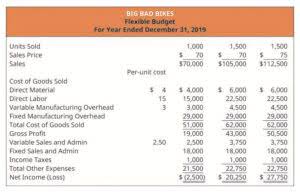
This statement is a valuable tool for preparing and analyzing financial performance. Let us understand how to prepare multi-step income statement and how to identify the items that should be included under each head. A Multi-Step Income Statement is a statement that differentiates among the incomes, expenditures, profits, and losses into two important sub-categories that are known as operating items and non-operating items. This ratio dives deeper into the relationship between sales and the costs directly tied to those sales. To get Gross Profit, subtract Cost of Goods Sold from Net Sales on your income statement.

Multi Step Income Statement

The multi-step format, with its clear categorization of revenues and expenses, paves the way for strategic business decisions and rigorous financial scrutiny. It’s important to note that the accuracy and adequacy of the multi-step income statement directly influence the understanding of a company’s financial performance. A meticulously prepared statement provides stakeholders with a detailed breakdown of the company’s financial activities and aids in assessing its operational efficiency and profitability.

a multistep income statement is useful to financial statement users because it

Thus, it provides a complete breakdown of the revenue and expense list in the income statement. It is very useful in the detailed analysis of the company’s financial condition for a specific period. Since a multistep income statement is useful to financial statement users because it the items are clearly listed, it becomes very easy for the users to analyse the core operation of the entity.

a multistep income statement is useful to financial statement users because it

Financial accounting involves the preparation of various statements and reports to provide valuable insights into a company’s financial performance. One crucial component of financial reporting is the income statement which summarizes the revenues and expenses incurred over a specific period. This article will delve into the intricacies of the multi-step income statement, its key components, preparation, and its significance in analyzing a company’s financial performance. The format of the multi-step income statement contains Non-Operating Head as the third section.

Like-kind exchanges of real property

While the concept is simple—swap one investment property for another—the execution is governed by a set of incredibly strict IRS rules and timelines. The improvements must be completed and the property acquired by the investor within the 180-day exchange period. The QI or EAT typically holds the funds and disburses them for construction costs. To achieve full tax deferral, the investor must reinvest all of the net proceeds from the relinquished property sale. The replacement property must be of equal or greater value than the relinquished property.

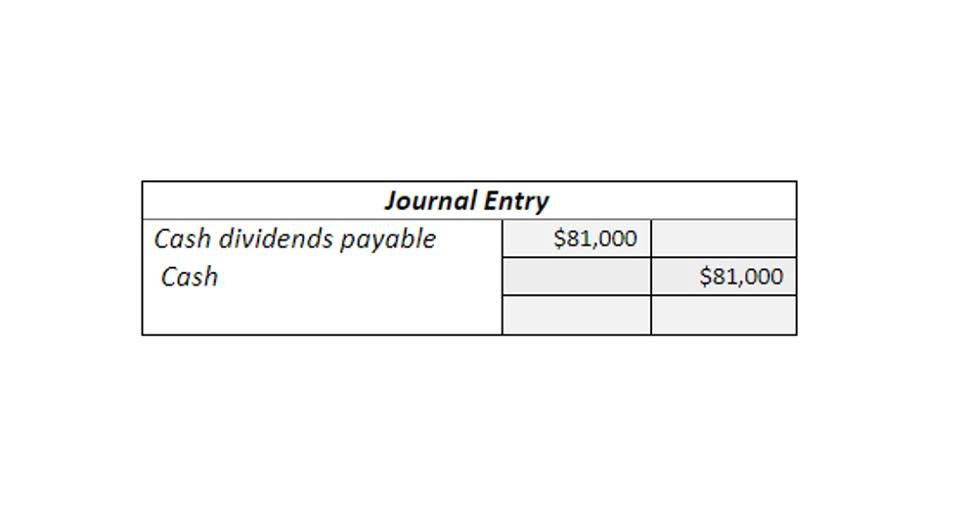
In Laura’s accounting entries, she recorded a debit due to the vacant lot and the construction or improvement in progress. When she completed the construction, she then recorded a credit due to the construction in progress account and a debit on the property construction account. Additionally, inadequate or insufficient records, especially for improvement exchanges may cause audit issues or jeopardize your like-kind exchange. Thus, ensure to keep accurate and detailed records of every transaction. There are several types of 1031 exchanges, each with its own unique accounting procedures.

  • You can still avoid current capital gains tax when you exchange one real estate property for another, or as a result of an exchange involving multiple parties, as long as certain requirements are met.
  • To calculate the adjusted basis, start with the carryover basis of the relinquished property—typically the original purchase price plus capital improvements, minus depreciation claimed.
  • Not all properties qualify for this exchange except for properties held for trade, business, or investment purposes.
  • The industry isn’t heavily regulated at the federal level, meaning the quality can vary dramatically.
  • From the day you close on your sale, you have exactly 45 calendar days to formally identify potential replacement properties.

Deferred and Reverse 1031 Exchanges

Additionally, records of property improvements, depreciation schedules, and cost basis calculations should be preserved, as they impact future tax obligations. The IRS generally requires taxpayers to keep records for at least three years after filing, but since 1031 exchanges affect long-term capital gains, retaining them indefinitely is advisable. After a 1031 exchange, determining the adjusted basis of the newly acquired property is necessary for future tax calculations, including depreciation and gain recognition upon sale. The basis of the replacement property is not simply its purchase price but is derived from the relinquished property’s basis, adjusted for additional expenditures, boot received, and transaction costs.

  • She will owe capital gains tax on the $100,000 she took out, but she still successfully defers the tax on the remaining $150,000 of her gain.
  • Any direct access to the funds by the investor constitutes “constructive receipt” and makes the funds taxable.
  • Depreciation schedules for different property types also affect the adjusted basis and tax obligations.
  • A 1031 Exchange Basis Worksheet helps taxpayers calculate the adjusted basis and ensures compliance with IRS regulations.
  • To report your like-kind exchange, use Form 8824 and attach it to your tax return in the same tax year as the exchange.

Different types of 1031 exchanges

She swapped her commercial office building property in California for a vacant lot valued at $300,000. She then invests an additional $200,000 to construct a new commercial office and apartment building on the lot, according to IRS guidelines. First, you’re likely to have a wrong valuation of your property if there are errors in your calculations. When conducting these exchanges, you must hold both properties for at least two years for investment or business use to qualify for the exchange. Technically, this means you can live in your newly acquired property after two years. To make it work for a 1031, you have to prove it’s a genuine rental property, not just a personal getaway.

1031 exchange accounting entries

Accounting for like-kind exchanges.

This broad definition allows exchanges between diverse types of real estate, such as an urban apartment complex for rural farmland. However, investors must consider the implications of these differences on their investment strategy and returns. Credits and exchange-related costs also factor into the adjusted basis calculation.

Depreciation, which accounts for wear and tear, is a critical factor. Under the Modified Accelerated Cost Recovery System (MACRS), residential properties depreciate over 27.5 years, while commercial properties use a 39-year schedule. Depreciation reduces the basis, potentially increasing the capital gain upon sale. For example, a property with an original basis of $350,000 and $100,000 in accumulated depreciation would have an adjusted basis of $250,000 before 1031 exchange accounting entries other adjustments. Additional factors, such as casualty losses or assessments for local improvements, further modify the basis. However, it’s relatively rare for two owners to simply swap properties.

Recall that missing the 180-day exchange timeline disqualifies you from enjoying the tax benefits of the exchange. Make sure to identify replacement investment properties before the 45-day deadline elapses and keep detailed records of all the identified properties. Also, keep track of the 180-day deadline and ensure you complete the property exchange within the timeframe. Depreciation calculations must be based on this adjusted basis, using the appropriate recovery period under the Modified Accelerated Cost Recovery System (MACRS). This distinction is critical for investors optimizing tax deferral strategies while ensuring compliance. A sells her office building using a Sec. 1031 exchange (using current tax rules).

Remember, this 180-day period includes the 45-day identification window. Smart investors know this, and they start looking for replacement properties long before they even list their current one. The IRS wants to see that you planned to hold the property to generate rental income or to let it appreciate over time. While there’s no official holding period, most tax advisors recommend owning a property for at least one to two years to build a strong case for your investment intent. The big takeaway here is that you can’t exchange real estate for something else, like a piece of art or heavy machinery.

The deferred taxes accumulate with additional 1031 exchanges.

To avoid this, he consulted with a CPA, who recalculated his adjusted basis and adjusted his bookkeeping entries. For example, with QuickBooks you can accurately report your taxes, efficiently manage your 1031 exchange financial transactions, and effectively track any asset transfers and management. These help you align your financial records with the internal revenue code for 1031 exchanges. At Universal Pacific 1031 Exchange, we’re here to help you boost your investment returns by lowering your tax liabilities.

Frequently Asked Questions About 1031 Exchanges

Imagine an investor sells a property for $600,000, which nets her $400,000 in cash after the mortgage is paid off. To complete the exchange and defer every penny of tax, Sarah uses the entire $700,000 from her sale and takes out a new $400,000 mortgage. She successfully leveled up her portfolio without writing a check to the IRS, all because she bought a property of equal or greater value and rolled all her proceeds into the new deal. Think of the QI as a mandatory, neutral third party who acts as a specialized escrow agent for your exchange. Their main job is to hold the proceeds from your sale in a secure account, preventing you from having what the IRS calls “constructive receipt” of the funds. The entire success of a 1031 exchange boils down to hitting two critical, overlapping deadlines.

Therefore, when conducting a 1031 exchange, avoid any cash boot by reinvesting all your exchange proceeds in purchasing another property. To fully understand accounting practices for exchanges, let’s look at some examples. John gave up his property worth $50,000 for another like-kind property worth $40,000 through a 1031 delayed exchange.

Don’t Get the Boot While You’re Replacing Your Property.

The rules of a 1031 exchange require the real estate investor to replace the disposed property with a ‘like-kind’ property, which can complicate accounting. A 1031 exchange offers taxpayers a strategic opportunity to defer capital gains taxes when selling and reinvesting in like-kind properties. This tax-deferral mechanism is valuable for real estate investors aiming to maximize their investment potential without the immediate burden of taxation. If the taxpayer receives any of the proceeds from the relinquished property in cash or other property that is not of like kind, this amount is considered “boot” and is immediately taxable (Sec. 1031(b)). Likewise, if the taxpayer is relieved of any debt resulting from the Sec. 1031 exchange, the reduction in debt is considered taxable boot as well.